As a frequent home cook and a steak-loving food writer, I have spent years testing both the New York strip and filet mignon in restaurants, on backyard grills, and in cast-iron skillets at home. While both cuts are premium steaks, they provide you with completely different eating experiences. One focuses on bold beefy flavour and satisfying texture, while the other is prized for its luxurious tenderness and elegance. This guide compares New York strip vs filet mignon across taste, texture, nutrition, price, cooking methods and overall value, so you can easily choose the right steak.
What Are New York Strip and Filet Mignon?
New York strip and filet mignon come from different parts of the cow, which truly explains why they taste and feel so different on the plate.
The New York strip comes from the short loin, an area behind the ribs, which does relatively less work, because of which the meat stays tender while still developing noticeable marbling and a signature fat cap along one side. This cut is known for its balance of tenderness and rich steakhouse flavour.
Filet mignon comes from the tenderloin, a long muscle which runs along the spine. Since this muscle barely gets used, it becomes very soft and lean. Filet mignon is one of the most tender cuts of beef available, but it contains far less marbling than a strip steak. Readers interested in understanding steak marbling and beef cuts can explore this detailed guide from Serious Eats.
Why This Matters
Cuts from less-worked muscles become naturally tender, but fat content and muscle structure also influence flavour. The strip steak keeps more marbling and connective texture, creating a stronger beef taste. Filet mignon sacrifices some of that intensity for buttery softness.
Taste and Mouthfeel: Rich Flavour vs Bland Luxury
The biggest difference between these steaks is flavour intensity.
A New York strip delivers you with a strong, beefy taste with a noticeable richness from its marbling. The fat cap renders beautifully during cooking, adding depth and creating the classic steakhouse flavour which many people expect from a premium steak. It also has a firmer bite and slight chew, which meat lovers usually prefer because it feels quite hearty and satisfying.
Filet mignon is much milder; its appeal comes from the texture rather than the intense beef flavour. The meat is quite buttery, delicate and almost velvety when it is cooked correctly. Because it is leaner, fillet does not produce the same rich, fatty flavour as a strip steak. Some diners even describe it as understated unless combined with sauces or butter.
The differences change the entire dining experience. A strip steak feels quite bold an dfillinf, while the fillet mignon feels quite refined and elegant.
Best For…
Choose filet mignon if you want:
- Extremely soft texture
- Elegant restaurant presentation
- Rich sauces like béarnaise or peppercorn cream
- A lighter, less fatty steak experience
Choose New York strip if you want:
- Deep beefy flavor
- Smoky grilled character
- A steak that works well with dry rubs
- A hearty steakhouse-style bite
Tenderness and Texture Comparison
Both steaks are tender compared with tougher beef cuts, but their textures are noticeably different.
| Feature | New York Strip | Filet Mignon |
| Primary texture | Firm, slightly chewy | Melt-in-your-mouth soft |
| Marbling/fat | Noticeable marbling and fat cap | Very lean with little visible fat |
| Overall eating experience | Rich, hearty steakhouse chew | Silky and delicate |
| Flavor intensity | Bold and beefy | Mild and buttery |
| Cooking difficulty | Forgiving and easy to cook | Easier to overcook |
| Best cooking style | Grilling and cast-iron searing | Pan-searing or sous vide |
A New York strip provides you with more resistance when you bite into it, which many of the steak fans associate with quality and substance. Filet mignon almost falls apart with a fork, which makes it ideal for diners who prioritise tenderness above all else.
Nutrition and Health: Which Is Leaner and Better for Diets?
Filet mignon is usually the leaner and lower-calorie option. Because it contains less marbling and visible fat, it usually has fewer calories and less saturated fat per ounce than a New York strip.
That makes filet mignon appealing for:
- High-protein diets
- Lower-fat eating plans
- Portion-controlled meals
- People monitoring calorie intake
New York strip contains more intramuscular fat, which boosts flavour but also increases the calorie density. The additional marbling contributes to a richer eating experience but may not suit people who are aiming for lower-calorie meals.
However, portion size matters just as much as the cut itself; restaurants usually serve large 12 to 16-ounce strip steaks, while filet mignon portions are commonly 4 to 6 ounces. A smaller portion of strip steak may fit into a balanced diet more easily than an oversized one-filet with heavy sauces and sides.
If your main goal is to maximise the flavour, the strip usually wins. If your priority is lean protein with premium tenderness, filet mignon is usually the healthier choice for you.
Price and Value: Cost Per Ounce vs Overall Experience
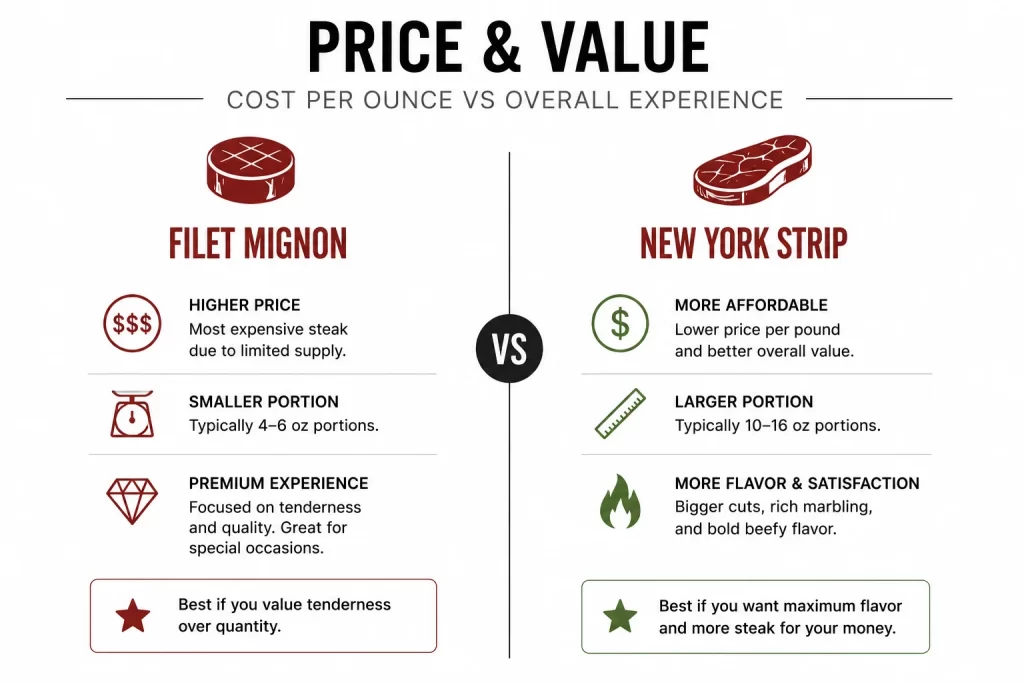
Filet mignon is usually one of the most expensive steaks on the menu. Since the tenderloin muscle is quite small and highly prized, supply is quite limited asd compared to strip steak. Restaurants and butchers price filet accordingly.
Most filet mignon portions range from 4 to 6 ounces, which focuses on quality and tenderness rather than only the size of it. This makes filet like a luxury or special occasion steak.
New York Strip is usually more affordable per pound and comes in much larger cuts, usually between 10 and 16 ounces. For many steak lovers, strip steak provides you with better value because you get more meat, stronger flavour and a satisfying portion size without paying any premium filet prices.
If you care more about the tenderness than the quantity, filet can feel worth every dollar for you, if you want to have maximum flavour and satisfaction for the money, strip steak usually delivers better overall value.
Best Cooking Methods (With Practical Tips)
Cooking Filet Mignon
Filet mignon shines when cooked carefully to medium-rare. Because it is lean, overcooking quickly dries it out and removes the buttery texture, which makes it special.
Best methods:
- Pan-searing
- Sous-vide
- Oven finishing after searing
Butter-basting with garlic, thyme, or shallots works especially well because filet benefits from added richness. Many chefs also pair it with compound butter or creamy sauces.
Quick Filet Guide
- Sear: 3–4 minutes per side
- Target temperature: 130–135°F
- Rest: 5–10 minutes before slicing
Cooking New York Strip
New York strip performs beautifully over high heat because the fat cap renders and creates excellent crust development.
Best methods:
- Grilling
- Cast-iron searing
- Reverse searing
- Smoking
The strip’s marbling helps protect it from drying out, which makes it more forgiving for home cooks.
Quick Strip Guide
- Sear or grill: 4–5 minutes per side
- Target temperature: 130–140°F
- Let the fat cap render fully for the best flavour
For both steaks, using a meat thermometer considerably improves consistency and prevents overcooking. Following ideal steak doneness temperatures can also help you cook both cuts more accurately at home.
When to Choose New York Strip vs Filet Mignon
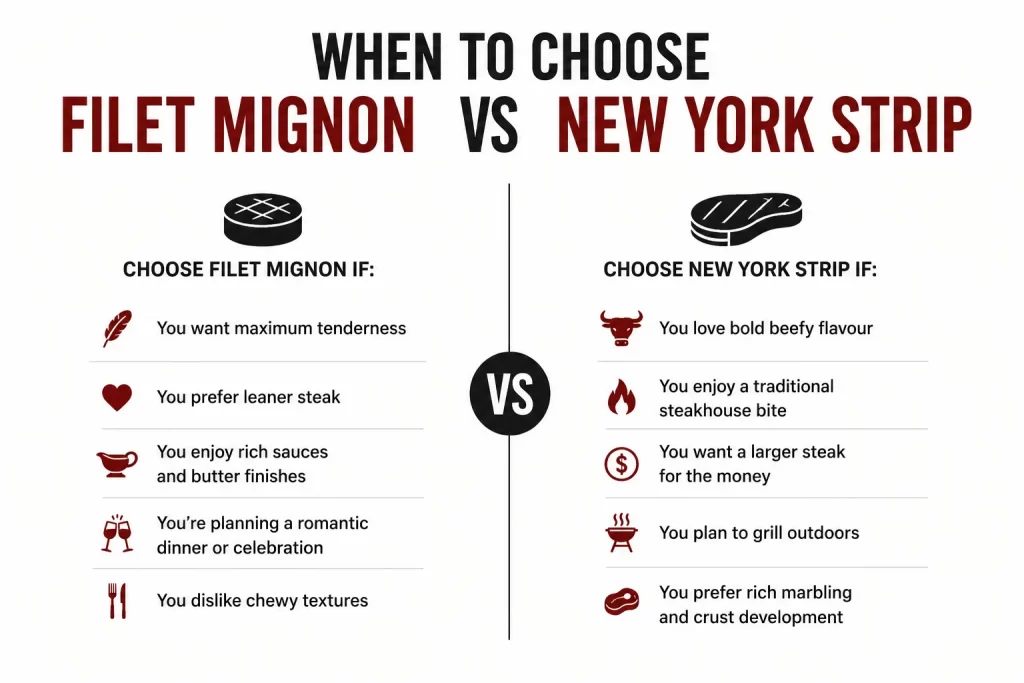
Choosing between filet mignon and New York strip ultimately depends on what kind of steak experience you want.
Choose Filet Mignon If:
- You want maximum tenderness
- You prefer leaner steak
- You enjoy rich sauces and butter finishes
- You are planning a romantic dinner or celebration
- You dislike chewy textures
Choose New York Strip If:
- You love bold beefy flavour
- You enjoy a traditional steakhouse bite
- You want a larger steak for the money
- You plan to grill outdoors
- You prefer rich marbling and crust development
There is no universal better steak between the two. Filet mignon prioritises softness and elegance, while the New York strip focuses on flavour and satisfaction. Many steak lovers eventually realise the best choice depends less on the price and more on the kind of meal they want that day.
If tenderness is your top priority, go with the filet mignon. If flavour and steakhouse character matter the most, the New York strip is hard to beat.
FAQs
- Is filet mignon healthier than New York strip?
Filet mignon is usually considered healthier because it is leaner and contains less saturated fat and fewer calories per ounce than New York strip. However, preparation methods and portion sizes can make a big difference in the overall nutrition profile.
- Which steak is better for beginners to cook?
New York strip is usually easier for beginners because its marbling makes it more forgiving during cooking. Filet mignon can dry out quickly if overcooked, so it requires more attention to temperature and timing.
- Can you grill filet mignon and New York strip the same way?
Not exactly. New York strip handles high-heat grilling very well because of its fat content, while filet mignon benefits from gentler heat and careful timing. Many cooks prefer finishing a filet in the oven after searing to avoid overcooking.
- Which steak pairs better with wine?
Filet mignon pairs well with lighter red wines like Pinot Noir or Merlot because of its delicate texture and mild flavour. New York strip matches better with fuller-bodied wines such as Cabernet Sauvignon or Malbec that complement its richer, beefier taste.
- Which steak gives better leftovers?
New York strip usually reheats better because its marbling helps retain moisture and flavour. Filet mignon can become dry or lose its tender texture if reheated too aggressively.